









How Does Defoamer Addition Affect Coating Surface Quality?
Release time: 2026-09-22
Índice
In coating formulations, foam can affect both production efficiency and the appearance of the finished film. Air introduced during mixing, dispersion, pumping, and application may remain in the coating and cause defects if it is not adequately controlled. Persistent foam and entrapped air can contribute to pinholes, surface voids, and uneven film appearance. Other defects, such as craters and gloss reduction, may also arise from formulation incompatibility or surface tension differences.
Selecting the right antiespumante is therefore an important part of coating formulation. Its performance depends not only on its ability to destabilize foam, but also on its compatibility with the coating medium, incorporation process, and influence on final film properties. Understanding these factors helps formulators balance foam control with surface quality.
What Is the Difference Between Defoaming and Air Release?
Foam and entrapped air are related problems, but they are not identical. Foam generally refers to gas bubbles surrounded by liquid films, often visible on the coating surface. Entrapped air refers to bubbles that remain inside the coating, including small bubbles that may be difficult to detect before application.
Defoamers and air-release agents contribute to foam control through related but different mechanisms.
Defoamers primarily destabilize foam bubbles at the liquid surface, while air-release agents help reduce entrapped air within the coating.
Some additives can provide both defoaming and air-release performance. However, their effectiveness depends on the coating formulation, viscosity, film thickness, and application conditions.
Selecting the appropriate additive can help minimize foam-related defects and improve the appearance of the finished coating.
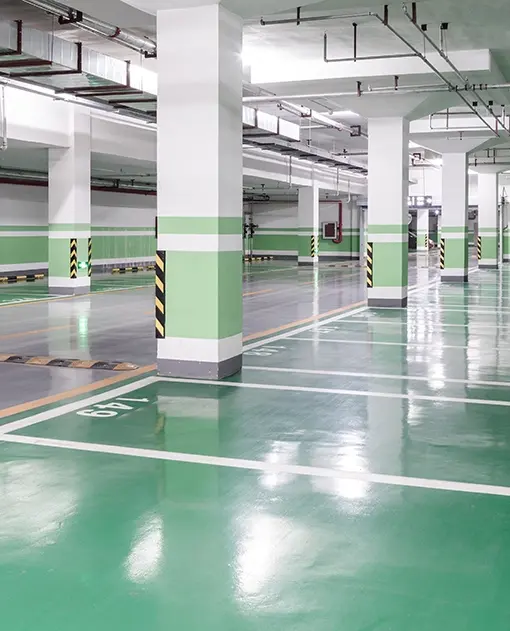
This distinction is important in systems such as thick-film epoxy floor coatings, high-solids coatings, and polyurethane coatings, where air trapped inside the film may be difficult to release before curing. A product with strong surface defoaming performance does not necessarily provide equally effective air release.
When selecting a agente antiespumante, formulators should therefore consider whether the main requirement is to eliminate surface foam, release entrapped air, or address both problems.
How Can Foam Cause Surface Defects?
Persistent foam and entrapped air can interrupt the formation of a uniform coating film. If bubbles remain during application and drying, they may leave small cavities or voids as the liquid film forms or cures.
Persistent foam and entrapped air can contribute to coating defects such as pinholes, surface voids, and uneven film appearance.
Surface defects such as craters may also occur, but they are frequently associated with localized surface tension differences, contamination, or additive incompatibility rather than foam alone.
Therefore, effective surface defect control requires attention to both foam management and overall formulation compatibility.
These distinctions matter when diagnosing coating problems. Pinholes and internal voids may indicate inadequate foam control or air release, while craters may require investigation of surface tension, substrate contamination, wetting behavior, and additive compatibility.
A suitable defoaming additive can help reduce foam-related defects, but it should not be treated as a universal solution for every surface imperfection. Identifying the actual cause of a defect is an important first step in selecting the appropriate formulation adjustment.
Why Does Controlled Incompatibility Matter in Defoamer Selection?
Many coating additives are selected for their compatibility with the formulation. Defoamers, however, often require a carefully controlled degree of incompatibility to function effectively.
An effective defoamer generally requires a carefully controlled degree of incompatibility with the coating medium.
If the defoamer is too compatible, its ability to destabilize foam may be limited. On the other hand, excessive incompatibility can lead to surface defects such as cratering, haze, or gloss reduction.
Therefore, defoamer selection requires a balance between foam-control efficiency, controlled incompatibility, and final coating appearance.
This balance helps explain why a defoamer that performs well in one coating system may produce different results in another. Resin chemistry, pigment loading, viscosity, and the water or solvent phase can all affect the behavior of the additive.
The objective is not to maximize or minimize compatibility in isolation. Instead, the selected product should provide effective foam control while maintaining the required appearance and performance of the finished coating.
For this reason, formulators should evaluate the antiespumante in the complete coating formulation rather than relying only on its general product category or defoaming strength.
How Does Defoamer Incorporation Affect Coating Quality?
The way a defoamer is introduced into a formulation can influence both foam-control efficiency and surface appearance. The additive’s distribution, droplet size, addition stage, and exposure to mixing shear may affect its performance.
Defoamer incorporation is an important factor affecting both foam-control efficiency and coating appearance.
Insufficient incorporation may produce large defoamer droplets, increasing the risk of surface defects. Excessive dispersion may reduce the effectiveness of certain defoamers by making them too finely distributed within the coating medium.
Therefore, the addition stage, mixing intensity, and incorporation time should be optimized according to the defoamer technology and coating formulation.
These effects mean that more intensive mixing does not always produce better results. Depending on the defoamer technology, insufficient incorporation may lead to poor distribution and surface irregularities, while excessive dispersion may reduce the effectiveness of certain products.
The addition stage also matters. A defoamer introduced during pigment grinding may behave differently from one added during the let-down stage or immediately before application. The appropriate process depends on the coating system and the product’s technical requirements.
During formulation trials, the addition sequence, mixing intensity, and incorporation time should be recorded and adjusted systematically. This helps distinguish problems caused by the additive itself from those caused by the incorporation process.
How Should Defoamer Performance Be Evaluated?
The effectiveness of a agente antiespumante should be judged by both foam control and the quality of the finished film. A reduction in visible foam during mixing does not necessarily mean that the applied coating will have an acceptable surface.
Several tests can help evaluate performance:
Foam control during mixing
Observe the amount and persistence of surface foam during production and mixing. Compare results under consistent mixing conditions.
Air release after application
Check whether entrapped bubbles disappear before the coating dries or cures. This is especially important for thicker films and high-viscosity systems.
Surface appearance
Inspect the dried coating for pinholes, surface voids, craters, haze, and other visible irregularities. Investigate craters separately rather than assuming they are always caused by foam.
Gloss and film uniformity
Compare gloss and surface texture across the coated area. Where relevant, evaluate whether the additive affects film transparency, smoothness, or visual consistency.
Formulation stability
Observe whether the additive remains effective during storage and whether changes in the formulation affect its performance. Repeat application tests when necessary.
These evaluations should use consistent dosage levels, mixing procedures, film thicknesses, and drying or curing conditions. Comparing results under controlled conditions makes it easier to determine whether a formulation change improves overall performance.
Which Defoamer Technologies Are Suitable for Different Coating Systems?
Defoamers are available in different chemical technologies, including silicone-based, mineral oil-based, and polymer-based products. Their suitability depends on the coating medium, application method, foam characteristics, and surface-quality requirements.
For example, Polywill’s product portfolio includes Coadd™ DF-1392, a mineral oil defoamer based on metal soap. According to the product information, it offers high defoaming efficiency and good compatibility and is recommended for medium- to high-PVC latex paints.
This makes DF-1392 a product to consider when formulating the relevant architectural coating systems. Its suitability should still be confirmed through formulation testing, since the final performance depends on the complete formulation and processing conditions.
Other coating systems may require a different defoamer technology. A product intended for a particular water-borne formulation should not automatically be assumed to provide the same results in solvent-borne or solvent-free coatings. Product selection should be based on the documented application range and the specific performance requirements of the coating.
How Can Formulators Balance Foam Control and Surface Quality?
Effective foam control requires a combination of appropriate product selection, controlled incorporation, and practical testing. Formulators should consider three questions:
- Does the additive control the relevant type of foam or entrapped air?
- Does it maintain the required surface appearance without introducing new defects?
- Does it perform consistently under the formulation’s actual mixing, application, and curing conditions?
A suitable defoaming additive should provide the required foam-control performance without compromising the coating’s appearance. This requires balancing controlled incompatibility, additive distribution, and compatibility with the wider formulation.
When problems occur, changing the dosage alone may not resolve the issue. It may also be necessary to review the additive’s technology, the stage at which it is introduced, the mixing conditions, and the actual cause of the surface defect.
Conclusion
Defoamer addition can influence coating surface quality through its effect on surface foam, entrapped air, formulation interactions, and incorporation conditions. Effective foam control can help reduce pinholes and surface voids, but craters and other appearance defects may have additional causes that require separate investigation.
With more than 30 years of experience in eco-friendly polymer research, an R&D center spanning over 5,000 m², and 32 patented technologies, including 17 international patents, Polywill develops additives for coatings and other industrial applications. Its defoamer portfolio includes silicone, mineral oil, and polymer technologies for different formulation requirements.
For coating manufacturers, evaluating foam control together with air release, surface appearance, and processing conditions helps identify the most suitable additive for each system. This approach supports more consistent coating quality and more reliable formulation decisions.